








 English
 Ελληνικά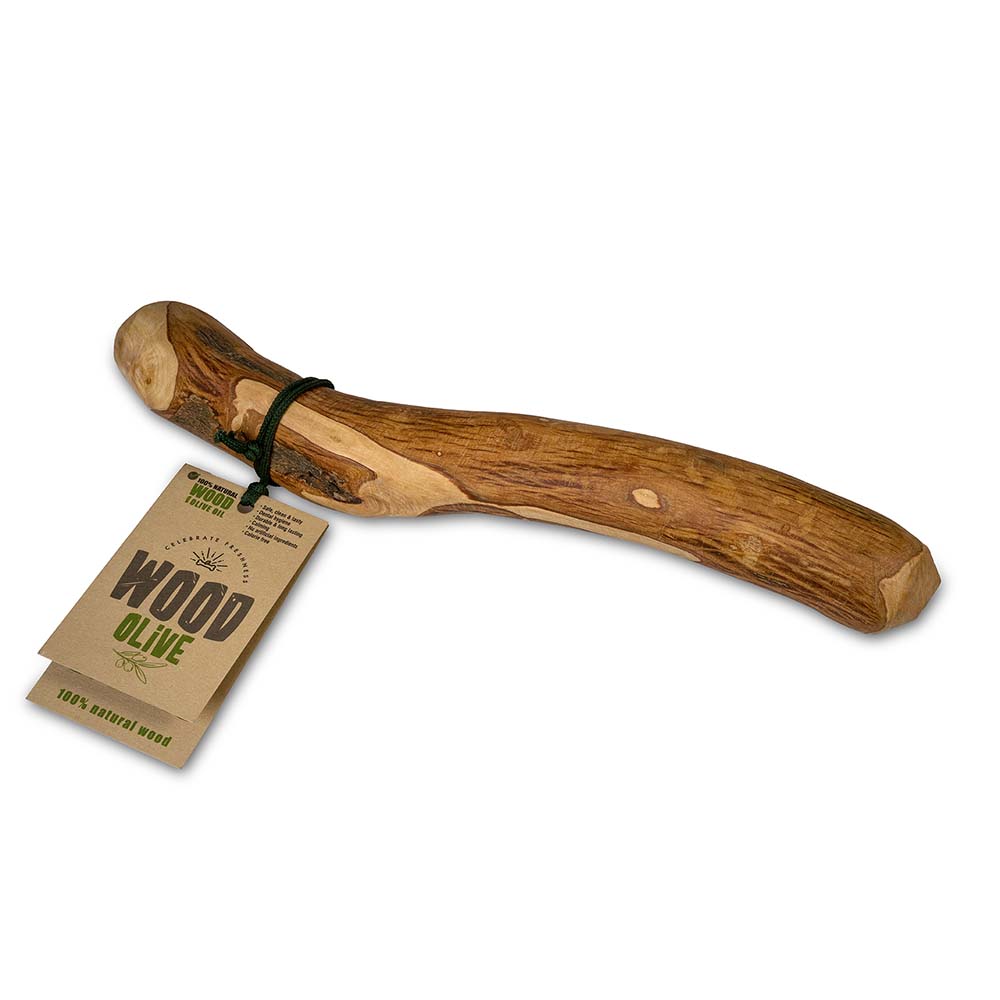


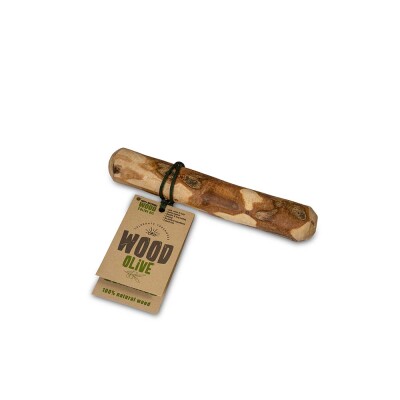
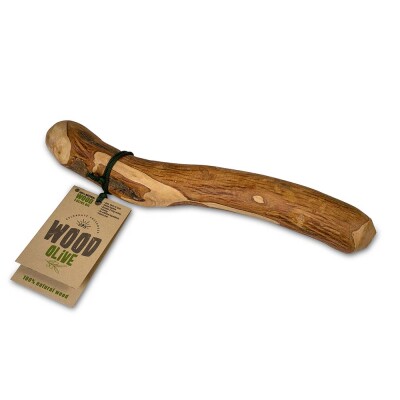
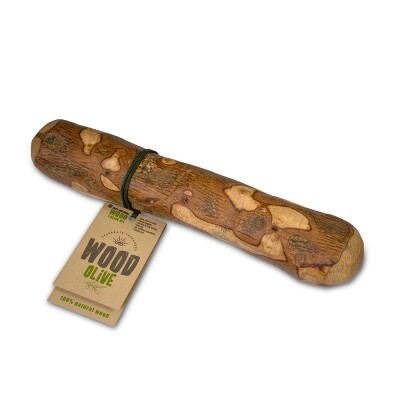
-Safe, clean, and tasty chewing wood.
-Suitable for dental hygiene.
-Enriched with olive oil for healthy fur and a strong immune system.
-Durable, long-lasting chew.
-No artificial ingredients – 100% natural.
-Calorie-free.
Composition: olive wood, olive oil.
Safe, clean, and tasty chewing wood suitable for dental hygiene and enriched with olive oil for healthy fur and a strong immune system. Its long durability provides extended chewing time, contains no artificial ingredients, has no calories, and is a 100% natural product. Each piece of olive wood is selected and carefully inspected, naturally dried to retain all natural nutrients and tannins* that are released when chewed. It is cut and polished to prevent any risks.
Dogs love to play and chew as they have a highly developed chewing instinct to maintain strong and healthy teeth. Each piece helps reduce your pet's stress. Chewing olive wood is safe, and the fibers derived can be swallowed and digested without harming your beloved friend. Olive wood is the ideal alternative to bones or antlers. It does not contain chemicals, additives, or dyes. The shape and dimensions may vary since it is a natural product.
Important: To avoid choking hazard, it is recommended to remove the product when it reaches a size that can be swallowed. Always supervise your dog during chewing.
*Tannins are a significant class of polyphenolic compounds with a characteristic bitter taste, widely found in nature. Chemically, they are associated and linked with certain proteins and other organic compounds such as amino acids and alkaloids. They are very common in the fruits of many plant species, especially those of oak and chestnut, the bark of pseudoacacia, tea, etc. They are also present in the roots, bark, fruits, and leaves of tropical species like Acacia and Quebracho. In Schinopsis balansae species, as much as 25% of their woody part can consist of valuable tannins. Known to humans since ancient times (ancient Egypt, Greece, and China), they have abundant uses. They inhibit the decay (rotting) of skins and are widely used in tanning, pharmaceuticals as drug formulations, and ink manufacture. White oak contains abundant tannins, but their most known application is in wooden oak barrels, where during wine aging, beneficial substances from the wood, including so-called enological tannins, are hydrolyzed at a consistent rate and infused into red wine.